Frutiger Aero is the soft, optimistic design language of the mid-2000s to early 2010s.
Glossy surfaces, translucent materials, aqua and green gradients, clean curves, and a sense that technology and nature could exist in perfect harmony.
Think Windows Aero, early iPod ads, shiny plastic, water droplets, and gentle fluorescent light.
When this aesthetic meets empty or transitional spaces, something interesting happens: the same clean lines and soft colours that once felt futuristic begin to feel suspended, comforting, slightly nostalgic, and sometimes completely unreal – like a digital render or lost memory. The result is a very specific kind of liminal atmosphere: bright rather than dark, shiny and new rather than decayed, and quietly dreamlike.
Here are 10 real-world locations that capture this rare Frutiger Aero design, and summon that nostalgic yet futuristic atmosphere.
Jewel Changi Airport – Singapore

A vast glass dome filled with tropical plants, centred around the world’s tallest indoor waterfall. When the crowds thin out, the soft daylight filtering through the transparent roof, the mist rising from the fall, and the carefully controlled climate create a polished, dreamlike atmosphere. The combination of living nature and high-tech architecture feels like stepping into an early-2000s vision of the future.
Prize by Radisson – Hamburg, Germany
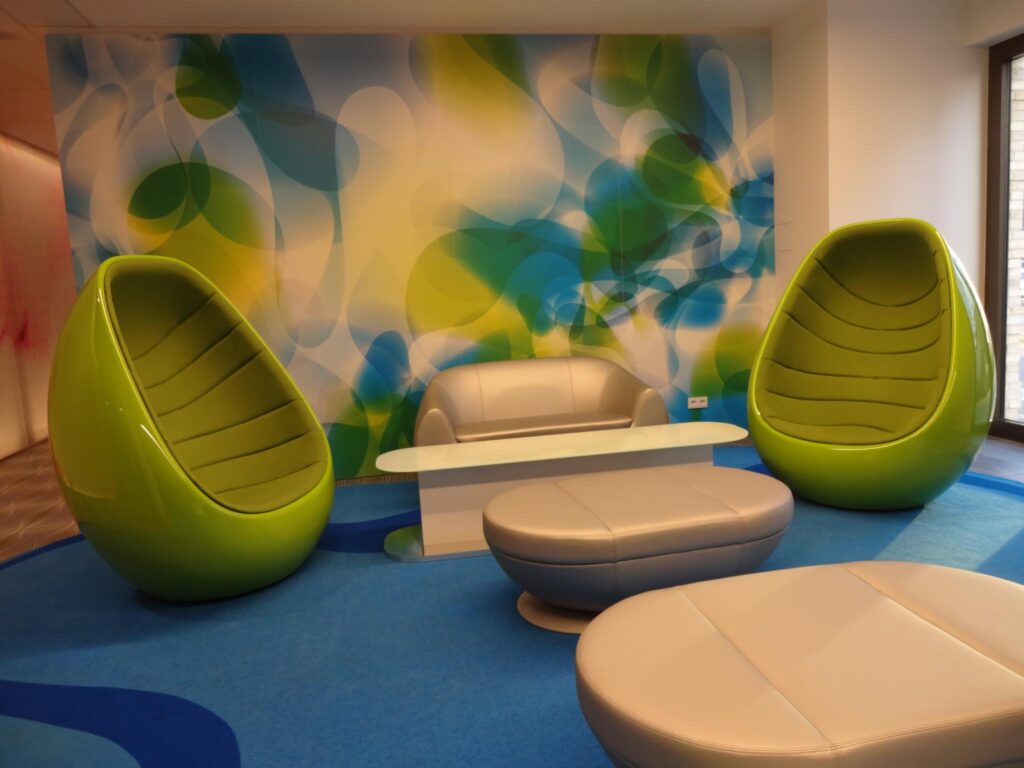
Designed by Karim Rashid with bold colors, glossy surfaces, and organic curves, this hotel still carries the signature Frutiger Aero energy of its original Prizeotel days. Empty corridors and public spaces take on a strong digital quality, and a sense that the interior was rendered rather than built. At quieter times of day it feels like walking through a slightly too-perfect virtual lobby, or movie set from the mid-2000s.
Eden Project – Cornwall, UK

The iconic biomes combine large-scale, transparent, and almost alien like architecture with lush planting. Standing inside the humid domes when the paths are quieter, creates a soft liminal feeling. The contrast between the engineered, shiny, geodesic structures and the organic, living interior feels like a real-world version of the nature/technology harmony that defined the Frutiger Aero period.
Sunshine Aquarium – Tokyo, Japan

A rooftop aquarium with glass tunnels and tanks high above the city. Soft blue lighting, curved transparent walkways, and the contrast between the contained water world and the urban view outside create a an oddly dreamlike image and atmosphere that only Frutiger Aero & Helvetica Aero could describe.
Museum of Tomorrow – Rio de Janeiro, Brazil
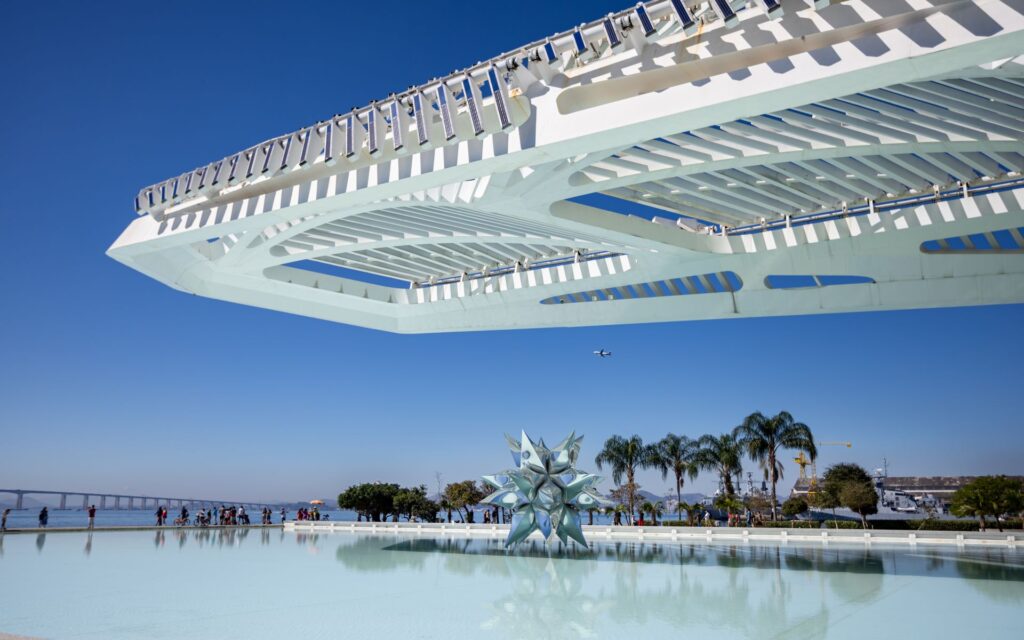
A striking modern structure with extensive glass, futuristic forms, and a strong nature-meets-technology atmosphere. When less crowded, the light-filled, reflective spaces feel suspended and slightly rendered: an optimistic architectural vision reminiscent of the world we were promised.
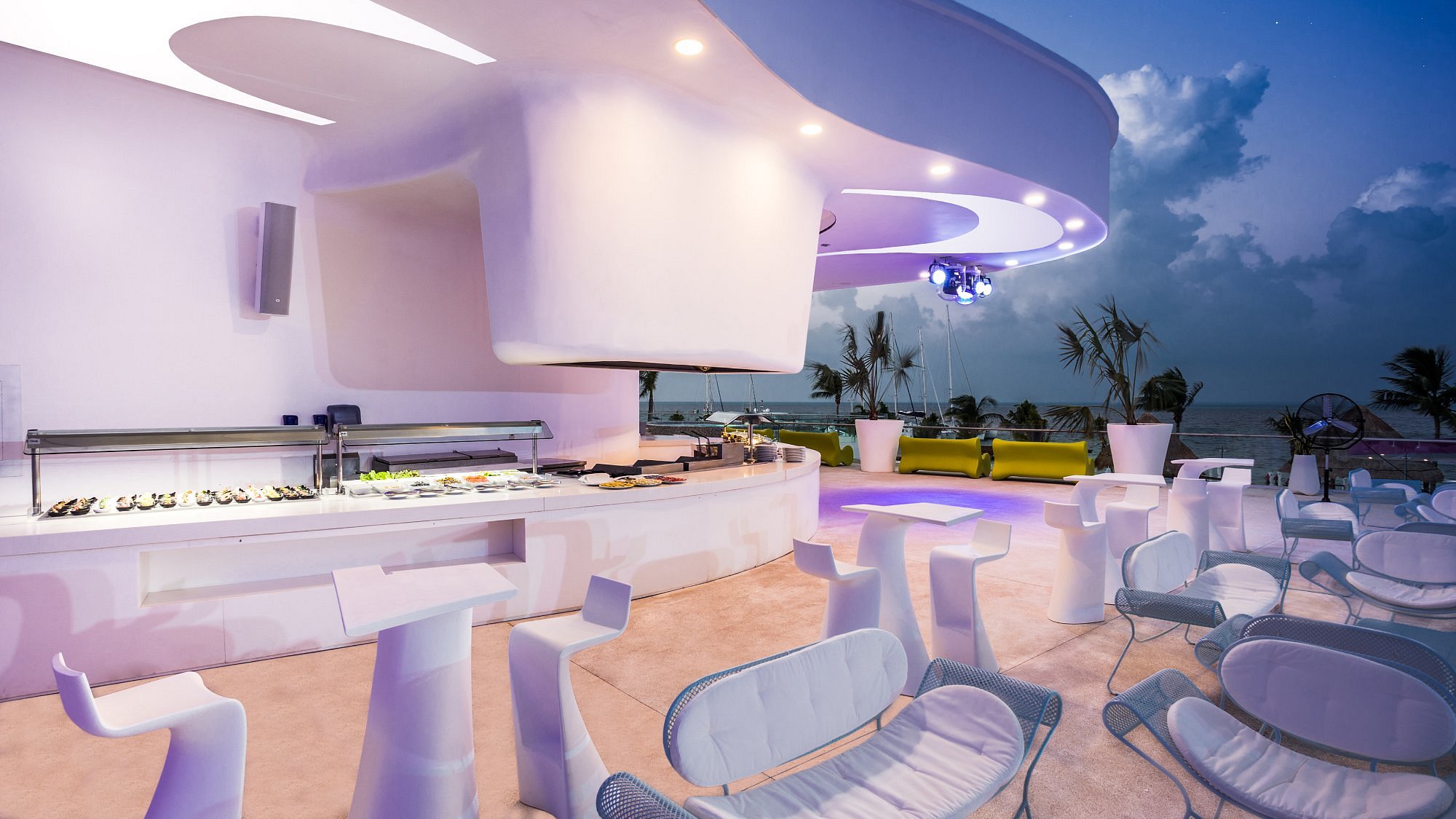
Temptation Cancun Resort – Cancun, Mexico
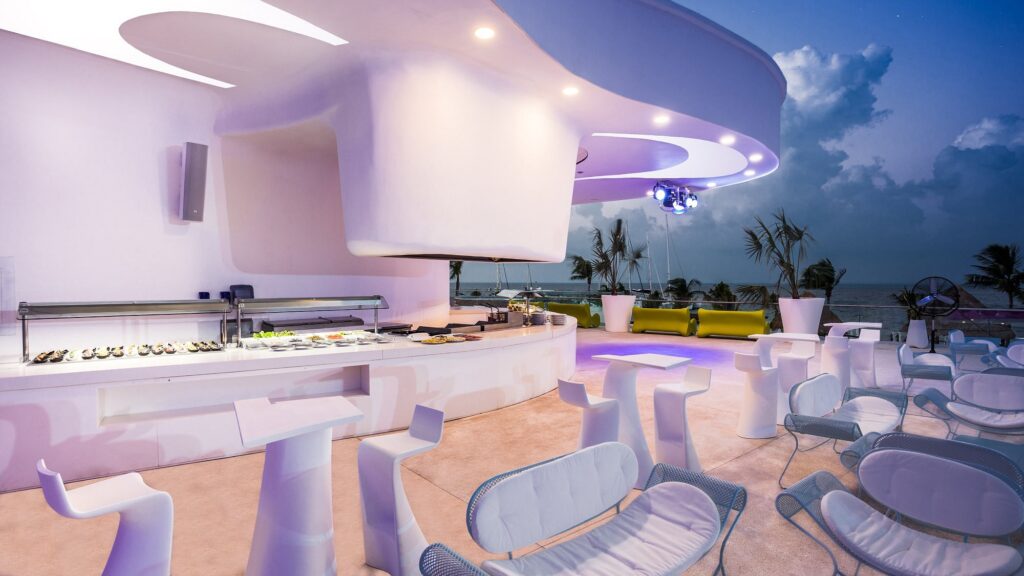
Designed with bold, playful, high-gloss interiors by Karim Rashid (the same designer behind the Prizeotels). The colourful, organic early-2000s aesthetic becomes especially nostalgic in the quieter corridors and public areas, where the shiny surfaces, fluorescent lighting, and fluid forms feel almost digital and dreamlike; like a lost memory of a childhood vacation you’re not sure you really went on.
Windows XP “Bliss” Hill – California, USA

.png)
The famous rolling green hill and blue sky that served as the default wallpaper for Windows XP. Photographed in 1996 in Sonoma County, California, it became one of the most viewed images in history when used by Microsoft in the early-000s . The unspoilt, optimistic landscape, featuring bright green grass under a vivid blue sky, remains a perfect example of the hopeful, nature-meets-technology feeling that later evolved into Frutiger Aero.
InterContinental Shanghai Wonderland – Shanghai, China

A hotel built into a former quarry, with large glass windows and rooms that look into water. The dramatic combination of raw rock, polished modern interiors, and the sense of descending into a controlled environment creates a powerful transition between the engineered and the organic.
Gardens by the Bay – Singapore

Enormous climate-controlled glass biomes filled with mist, elevated walkways, and fluorescently lit vegetation. The curved glass, colorful lights, and empty paths produce a sense of being inside a controlled, possibly generated environment that feels straight out of an early-2000s desktop wallpaper.
O2 Flagship Store – Munich, Germany *Former Location*

One of the most frequently cited real-world examples of Frutiger Aero design, created around 2005 by the agency dan pearlman. The mid-2000s interior featured bubble motifs, curved glass, soft aquatic blue gradients, and a light, airy feel that perfectly captured the era’s optimistic tech-meets-nature aesthetic. It even got bonus points for radiating that distinctive Helvetica Aqua atmosphere. There is still an O2 Live Store at Marienplatz 19 in Munich, but it has sadly been fully redesigned to a modern retail concept.
Frutiger Aero was never just an aesthetic, it was the future we were promised.
Bright yet gentle colors, clean shiny surfaces, and an optimistic belief that technology and nature could coexist in bright, airy spaces. These real-world locations still carry that feeling. Some were designed in the height of the era, others simply happen to embody the same spirit. Walking through them (or even just looking at photographs) offers a quiet reminder of a time when the future felt clean, hopeful, and a little bit surreal.
If you know of other places that capture this particular atmosphere, whether a quiet airport terminal, a glass-domed conservatory, a lobby that still feels stuck in 2005; or if you have been to any of the locations above, I’d love to hear about it! Let me know via the Contact page or Add a Location form.