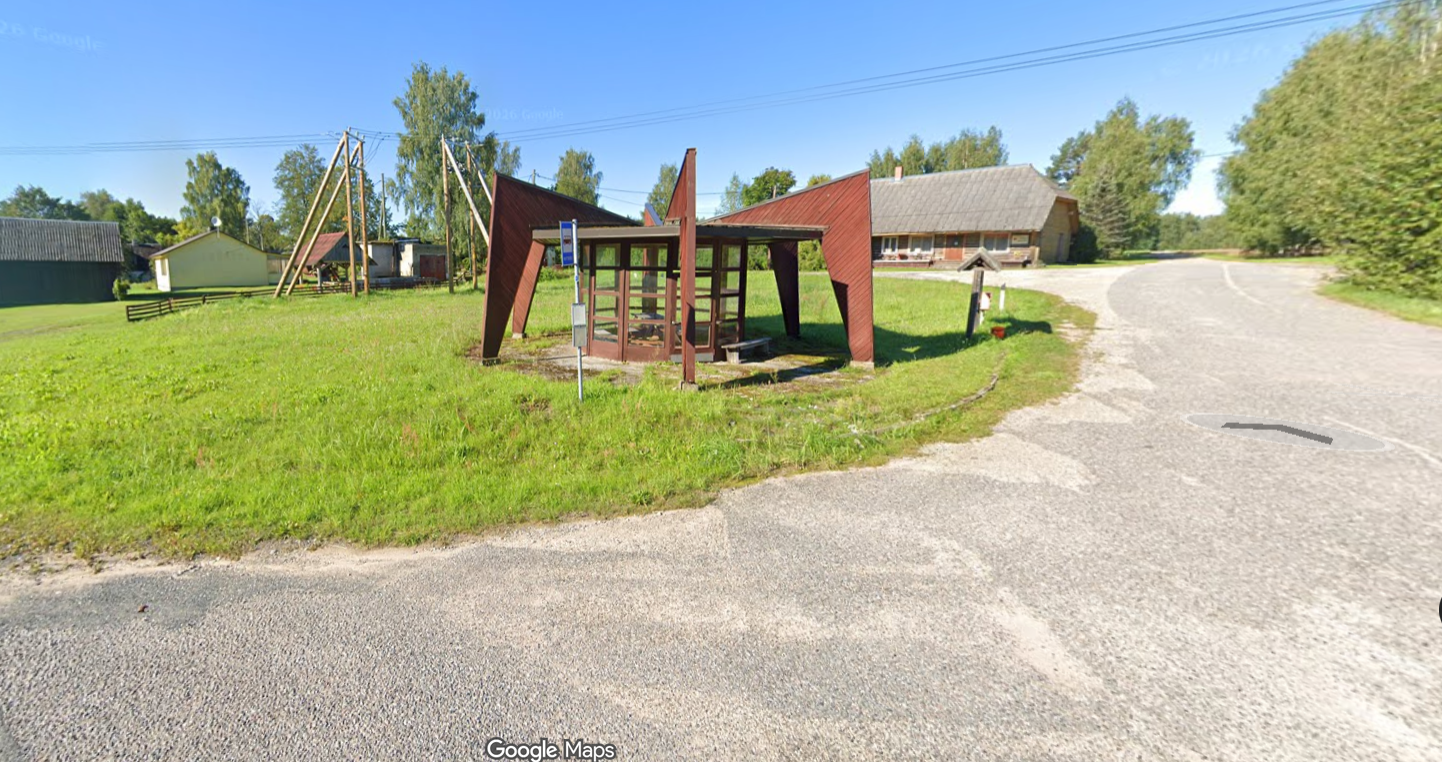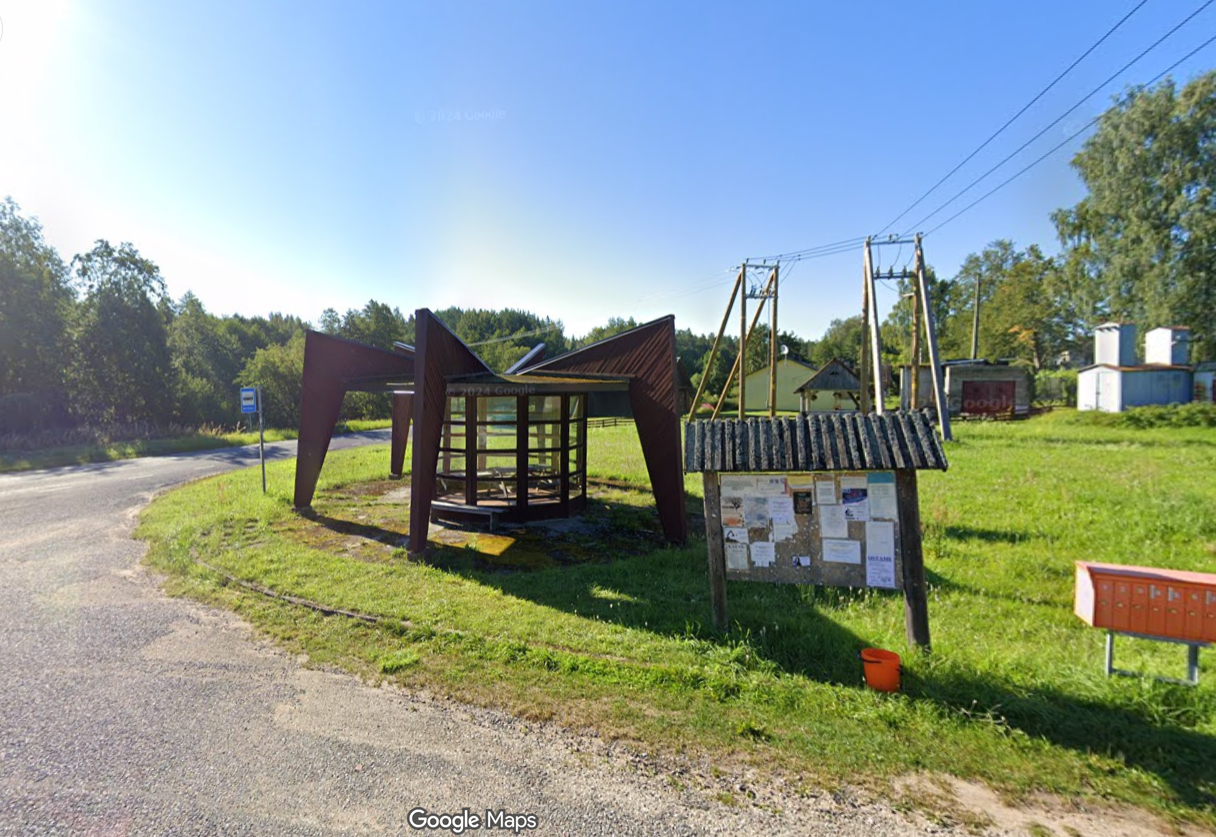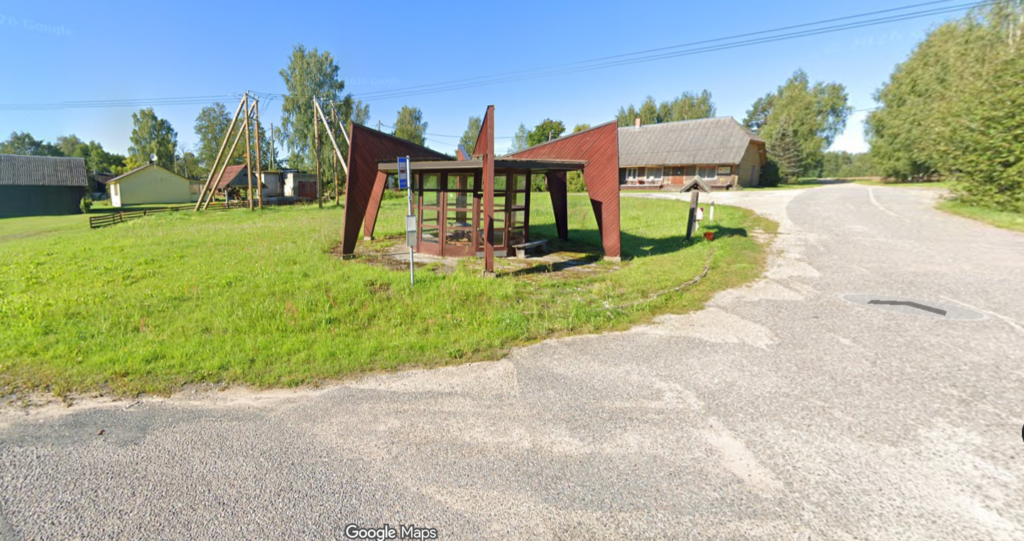
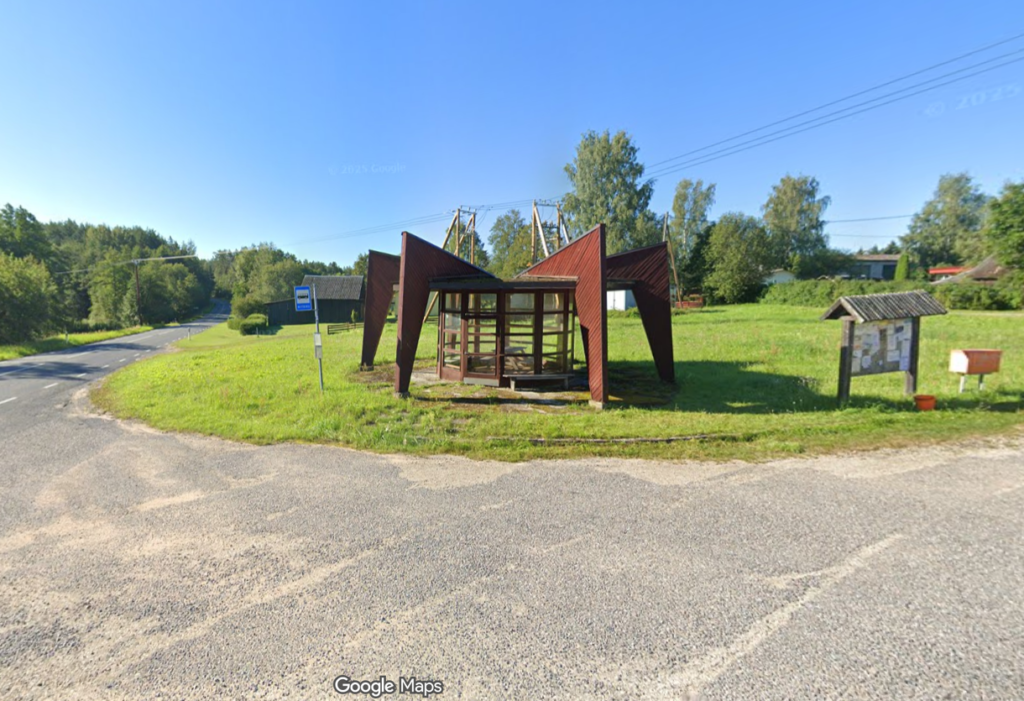

Beside a quiet rural road in southeastern Estonia stands one of the strangest surviving examples of Soviet-era architecture. At first glance, the bus stop looks almost like an enormous alien spider that has been beamed down onto the grass. Its angular red-brown panels jut outwards like long, pointed legs, surrounding a small glass-sided shelter at the centre. There is something distinctly uncanny and wonderfully unsettling about its appearance in such an isolated place – against the flat, open landscape and birch trees.
The structure dates back to the 1970s, when Estonia was part of the Soviet Union. It was created by Enu Mäela and Jüri Konsap, two workers at a local furniture factory, following the construction of a new road. Rather than waiting for official instructions, they designed and built a shelter for the local community, affectionately naming it The Spider. Its unusual appearance was not the product of a grand architectural commission, but of local initiative and creativity.
The Niitsiku Spider Bus Stop is a particularly compelling example of liminal architecture because it combines two very different qualities: the ordinary, transitional purpose of a roadside shelter and an appearance that feels strangely unnatural. Bus stops are places of temporary occupation, designed for waiting rather than staying. People arrive, pause briefly and disappear again, leaving the structure empty for much of its existence. Here, that familiar sense of transience is amplified by a design that seems almost animate, as though the shelter itself might move once nobody is watching.
Unlike many soviet bus stops, The Spider is still a recognised and used stop, it’s timetable can be found here: https://web.peatus.ee/pysakit/estonia%3A31530
Photo credits: Google Maps